
Every year, lakhs of graduates walk out of college with degrees but zero workplace experience. Employers want experience. Experience requires a job. The job requires experience. Round and round it goes.
The PMIS — PM Internship Scheme — is the Government of India’s structured answer to that problem. It places young Indians inside real companies, working on real projects, for up to 12 months, with a monthly stipend and mentorship built in.
This guide covers everything in one place: what the scheme is, who qualifies, how the application works, what the selection process looks like, and what you actually get out of it.
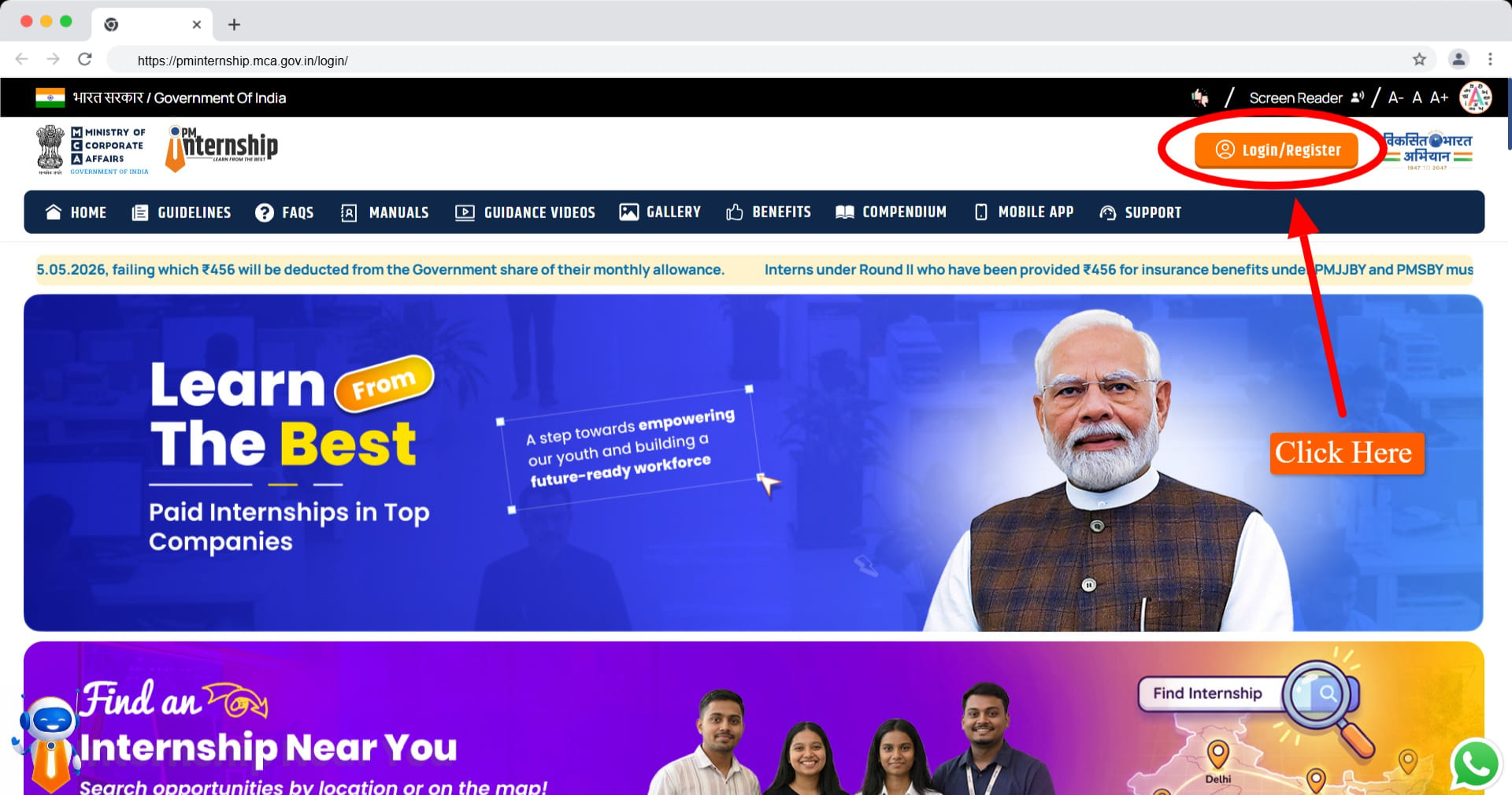
Key Takeaways
- Full name: PM Internship Scheme (PMIS), run by the Ministry of Corporate Affairs
- Target: 1 crore internships across 500+ companies over five years
- Duration: 6 to 12 months, full-time
- Stipend: Approximately ₹9,000/month (confirm current figure on the portal)
- Who can apply: Students, final-year students, and recent graduates aged 18–25
- Apply at: pminternship.mca.gov.in
- Selection: Document screening → merit shortlisting → interview → offer letter
- What you get: Stipend, mentorship, certificate, professional network, and possible job offer
What Is the PM Internship Scheme (PMIS)?
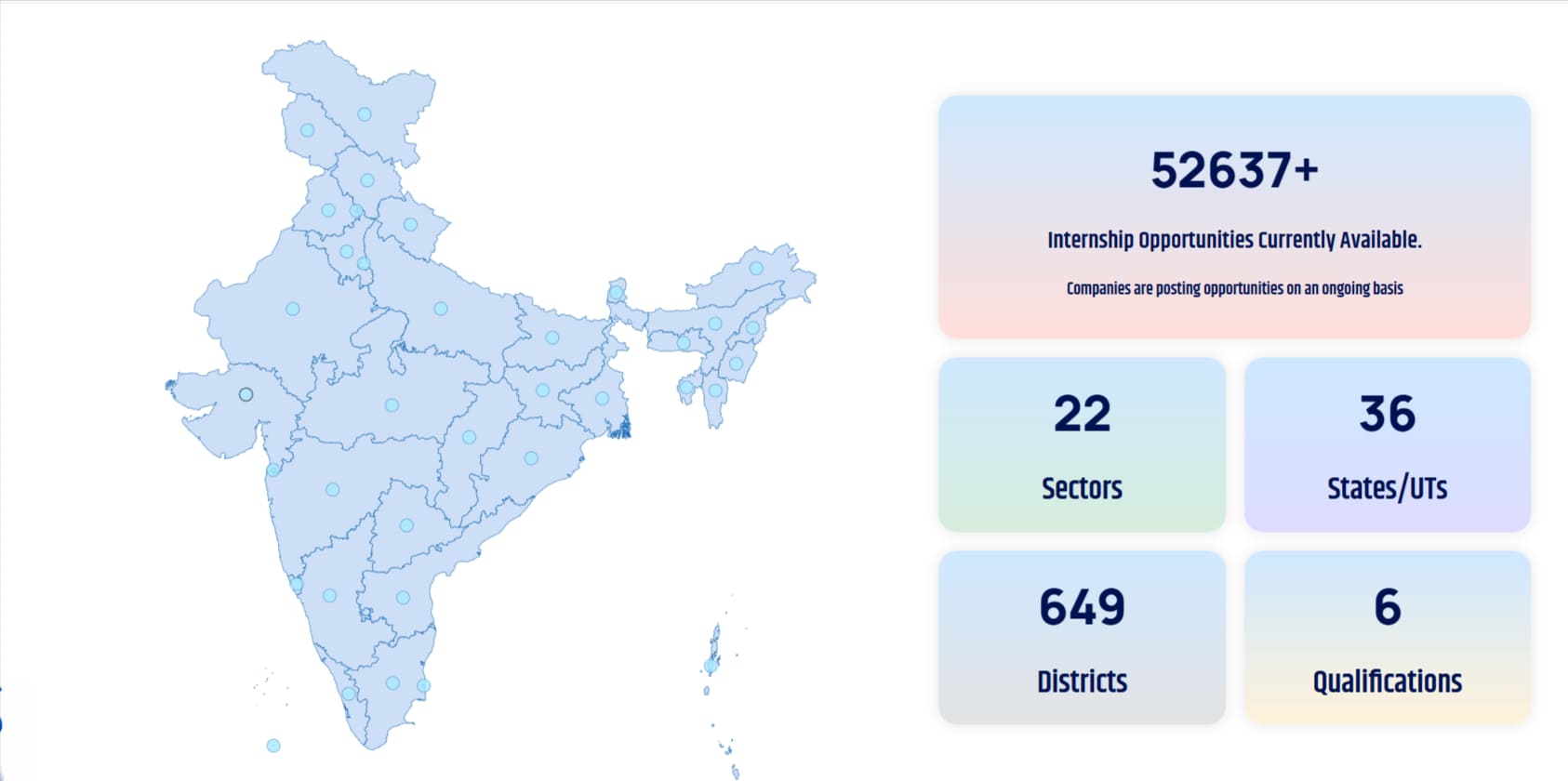
The PM Internship Scheme was launched on 3 October 2024 under the Ministry of Corporate Affairs, Government of India. The long-term goal is ambitious: 1 crore internships over five years, placed across 500+ of India’s largest public and private companies.
The pilot phase in FY 2024–25 covered 1.25 lakh internships. In 2026, the scheme is in active expansion mode — more companies, more sectors, more seats.
The core idea is simple. Instead of sending young people into the job market with only theoretical knowledge, PMIS puts them inside functioning organizations — working on live projects, reporting to actual supervisors, meeting real deadlines.
This is different from a short summer internship where you mostly shadow someone. A 6–12 month PMIS placement means you become a contributing team member. You ship work. That’s what goes on the resume.
Goals and Outcomes: Why the Government Built This
What PMIS Is Trying to Fix
India’s employment challenge isn’t just about the number of jobs — it’s about the mismatch between what colleges produce and what industries need.
PMIS targets that gap directly by:
- Giving students hands-on exposure to project management, corporate tools, and workplace communication
- Pairing interns with industry mentors who provide structured feedback
- Offering a monthly stipend so financial constraints don’t stop participation
- Creating a talent pipeline for companies that need motivated early-career hires
What You Can Expect to Walk Away With
At the end of a PMIS placement, you should have:
- Verifiable work experience on a real project, describable in interviews
- An official digital certificate from the host company and the scheme
- Improved employability through demonstrated skills and professional references
- A network of colleagues and mentors who can vouch for your work
Companies benefit too. They get motivated interns who contribute to ongoing projects and serve as a talent pipeline for future hires.
PMIS Eligibility: Who Can Apply for the PM Internship Scheme?
This is the section most people search for first — and get wrong, because they read unofficial sources with outdated information.
Here’s what current portal guidelines and government FAQs confirm:
Eligibility Checklist
| Criteria | Requirement |
|---|---|
| Citizenship | Must be an Indian citizen |
| Age | 18 to 25 years (some roles/hosts may vary — verify on portal) |
| Education | Diploma, undergraduate, or postgraduate from a recognized board/university |
| Student status | Final-year students and recent graduates are eligible |
| Employment status | Must not be in full-time employment |
| Availability | Must be available for the full internship duration |
Which Academic Backgrounds Qualify?
The scheme covers a wide range of disciplines — not just engineering or commerce. Students from Arts, Law, Management, ITI, vocational programs, and science backgrounds are all eligible, depending on the specific internship role.
Role-specific eligibility matters. A software development internship at a tech company may require a CS or IT background. A policy research role at a government ministry may suit graduates of Economics or Political Science. Read each job listing before applying.
Quick self-check: You’re between 18–25, have completed (or are completing) a diploma or degree from a recognized institution, and you’re not currently working full-time. That puts you in the eligible zone. Go verify on the portal and apply.
💡 Pro-Tip: Final-Year Students — Apply Now, Certificate Later
One common hesitation: “I haven’t graduated yet, should I wait?” Don’t. The scheme explicitly allows final-year students to apply. If selected, you can submit your completion certificate after graduation. Waiting until you graduate means missing the current application cycle. Apply now with your current enrollment proof and produce the degree certificate when it’s ready.
Who cannot apply for PMIS?
Knowing you don’t qualify before spending time on the application saves everyone effort.
- ❌ Currently in full-time employment
- ❌ Enrolled in a full-time degree program (final-year students are generally exempt — verify on portal)
- ❌ Outside the 18–25 age bracket as defined on the portal
- ❌ Does not hold the minimum educational qualification for the specific role
- ❌ Has already completed a PMIS placement (returning applicants — check portal rules)
Eligibility rules are managed directly on the portal and can be updated by cycle. Always verify at pminternship.mca.gov.in/FAQs/ before assuming you’re in or out.
How to Apply for the PM Internship Scheme Online
The entire application process is online. No offline forms, no agents, no fees.
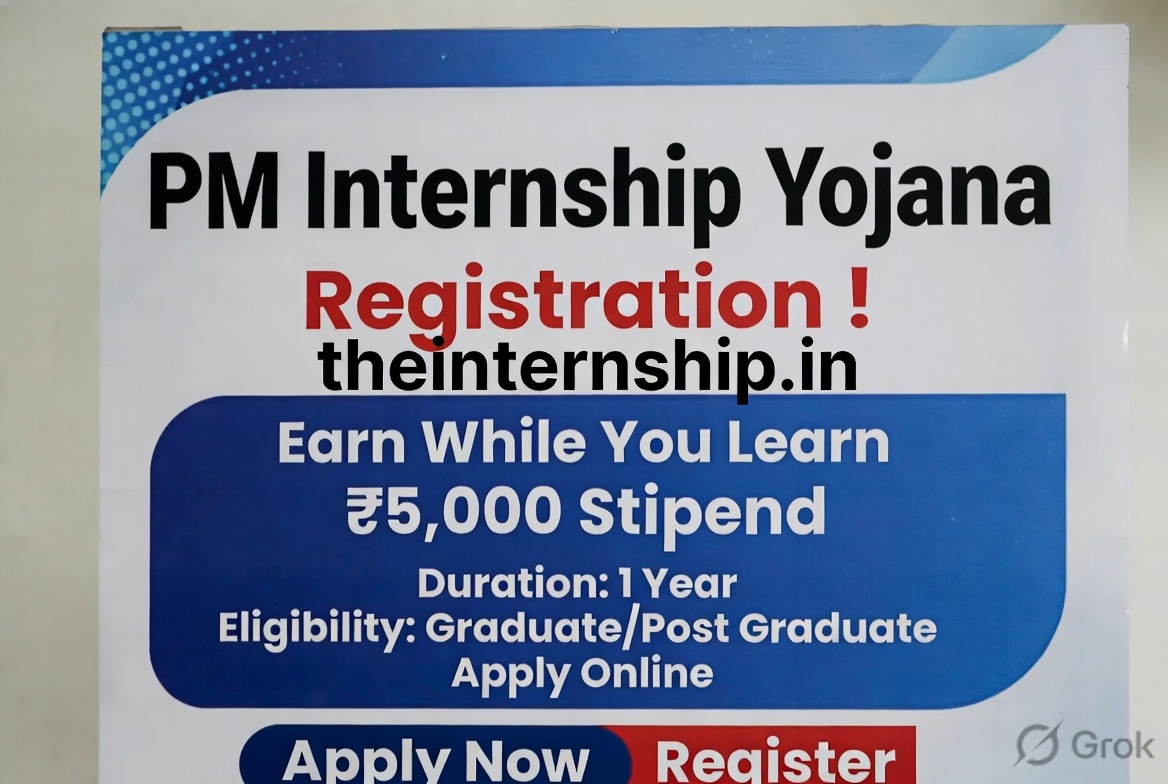
Here’s the exact process:
Step 1: Create Your Account
Go to pminternship.mca.gov.in. Register with a personal email address you check regularly and a valid mobile number. Verify both with OTPs before proceeding.
Use your own email — not a college email that gets deactivated after graduation.
Step 2: Complete Your Profile
Fill in every field:
- Full name, date of birth, current institution, or last qualification
- Course or stream, expected or actual graduation date
- Location preference and sector preference (select up to three)
Incomplete profiles get filtered out during shortlisting. Companies browsing the portal can see profile completion status. A half-finished profile is effectively invisible.
Step 3: Upload Required Documents
Have these ready before you start uploading — don’t begin without them:
- ✅ Valid government ID (Aadhaar, passport, or driving licence)
- ✅ Student ID or provisional certificate (or degree certificate if graduated)
- ✅ Recent marksheets or transcripts
- ✅ Updated resume/CV (one to two pages)
- ✅ Passport-size photograph (recent)
- ✅ University bonafide certificate or enrolment proof
- ✅ Cover letter (200–300 words explaining your interest and relevant skills)
- ✅ Caste certificate if applying under a reserved category
Scan all documents as PDF or clear JPG. Keep each file under 2MB. Label them properly — “Aadhaar_YourName.pdf”, “CV_YourName.pdf” — to avoid upload errors.
Step 4: Browse Internship Openings and Apply
Search available roles by sector, company type, duration, and location. Apply to roles that genuinely match your background and interests.
You can apply to multiple openings. Apply to at least 3–5 to give yourself a reasonable shortlisting chance.
Step 5: Track Your Application
After submission, monitor your portal dashboard and registered email regularly. Status updates appear as: Submitted → Under Review → Shortlisted → Interview Scheduled → Selected.
Respond promptly to any document verification requests or interview calls. Delayed responses can cost you the spot.
⚠️ Common Pitfall: Submitting and Disappearing
A surprising number of applicants submit their form and then stop checking the portal. Interview calls, document requests, and shortlisting notifications come through the dashboard and email — often with short response windows. Set a reminder to check your portal every 2–3 days after applying. Missing a shortlisting notification is one of the easiest ways to lose a seat you actually qualified for.
PMIS Selection Process: How It Actually Works
Stage 1: Document and Eligibility Verification
Every application goes through an initial eligibility check. Your submitted documents are verified against your form entries. Mismatches or missing documents lead to automatic rejection at this stage.
Stage 2: Merit Shortlisting
The system evaluates academic records, relevant experience, and skill certificates. Some cycles use automated score-band shortlisting. Top candidates for each role are moved to an interview list.
If you have course certificates, project work, or portfolio links relevant to the role, add them. They count during this stage.
Stage 3: Interview Rounds
Shortlisted candidates attend one or two interview stages:
Technical Interview: Tests role-specific knowledge. Prepare examples of relevant coursework, projects, or assignments. Explain your methods clearly — interviewers want to see how you think, not just what you’ve memorized.
Behavioral / HR Interview: Tests attitude, communication, and teamwork. Expect situational questions: “Tell me about a time you missed a deadline” or “How do you handle feedback?” Give concise, honest answers.
Interviews may be virtual or in-person. For virtual interviews, test your connection and join from a quiet location. Bring original documents if called in person.
Stage 4: Offer Letter
Selected candidates receive an offer letter on the portal with internship start date, stipend details, reporting instructions, and required paperwork. Waitlisted candidates should monitor the dashboard — offers move down the list when top candidates decline.
Internship Structure: What the Day-to-Day Looks Like
Project Assignments
You get a specific project on day one — not a vague “shadow your supervisor” brief. The posting includes deliverables, tools, milestones, and expected outcomes.
Common project types: policy research, data analysis, process improvement, communications, software development, or operations. You will produce concrete outputs — reports, datasets, code modules, or policy briefs — not just observations.
Work Timelines and Duration
Internships run for 6, 9, or 12 months, depending on the host company and your eligibility. Weekly workload typically ranges from 20 to 40 hours.
Work is organized into sprints or monthly milestones with scheduled supervisor check-ins. Attendance and leave follow the host institution’s policy.
Performance Evaluation
Your performance is measured against milestones and competency criteria throughout the placement. Evaluation combines supervisor ratings, peer feedback, and the quality of delivered work.
Successful completion awards a digital certificate verifiable on the scheme portal, and often a performance appraisal or recommendation letter from your supervisor.
Stipend and Benefits Under PMIS
Financial Support
- Monthly stipend: Approximately ₹9,000/month (verify current amount on official portal — figures can vary by host and cycle)
- Travel reimbursement: Some hosts include a daily allowance for site visits (check offer letter)
- Payment method: Bank transfer on a standard schedule set by the host company
Keep attendance records and any proof of participation — some hosts require these for payment processing.
What Else You Get
Beyond the stipend, the real value compounds over 12 months:
- Structured mentorship — weekly one-on-ones, targeted feedback, skill-building exercises
- Training sessions — technical tools, business processes, soft skills workshops
- Networking access — cohort events, speaker sessions, introductions to hiring managers
- Alumni networks — some partners maintain intern mailing lists and referral channels post-internship
Partner Companies: Who Hosts PMIS Interns?
Government Agencies
Central ministries — Finance, Commerce, IT — and public-sector units host interns on policy, compliance, data, and digital projects. These placements suit candidates interested in public service, regulatory careers, or policy research.
Expect clear role descriptions, fixed reporting structures, and access to government data and working groups.
Private Sector Partners
Large firms across IT, manufacturing, finance, telecom, and consulting post internship openings. These companies provide:
- On-the-job project work with measurable deliverables
- Internal mentorship programs
- Performance dashboards
- Accidental insurance coverage (in many cases)
- Possible hiring pipelines for high performers
Roles range from software development and data analysis to corporate finance, HR, and operations.
Post-Internship: What Comes Next
Job Placement Prospects
Many partner companies shortlist high-performing interns for entry-level roles — particularly when the intern worked on a project directly relevant to an open position.
Present your deliverables clearly in interviews: “I built a data model that reduced reporting time by 20%” is more compelling than “I worked on data projects.” Concrete outputs drive hiring decisions.
Pre-placement offers from partner companies typically come within 1–3 months of internship completion. Follow up actively and watch for openings on the PMIS dashboard.
Certification and Academic Recognition
Your official PMIS digital certificate lists your role, dates, and responsibilities — and is verifiable on the portal. Add the certificate link directly to your resume and LinkedIn profile.
Performance appraisals from supervisors serve as professional references. Many colleges also accept PMIS completion as proof of practical experience for academic credit — check with your institution’s coordinator.
Next Steps: What To Do Right Now
Don’t save this article and come back later.
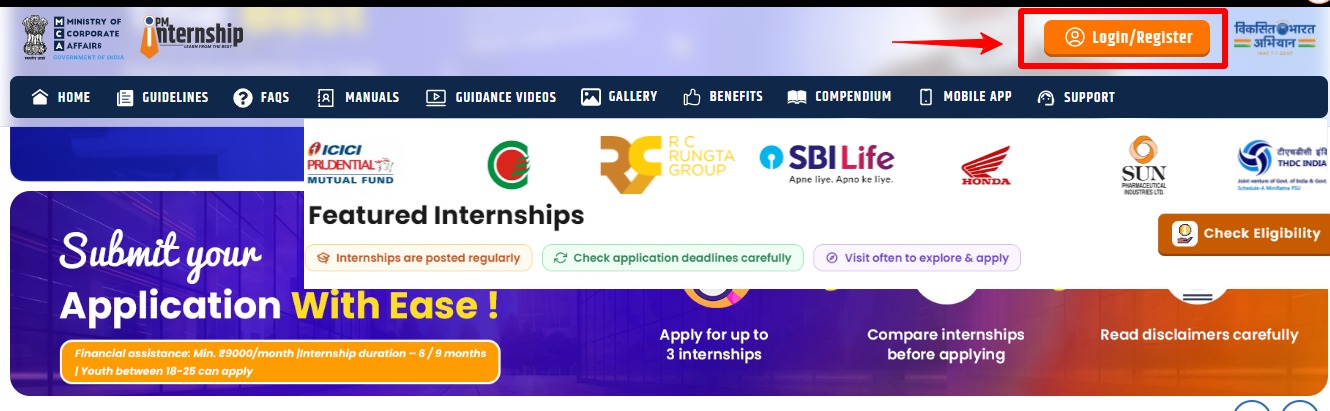
- Go to pminternship.mca.gov.in and create your account today
- Read the official FAQ at pminternship.mca.gov.in/FAQs/ to confirm your eligibility for the current cycle
- Prepare your documents now — don’t start the application without them ready
- Build a strong profile — fill every field, add skill certificates, upload a clean CV
- Apply to 3–5 roles that genuinely match your background and location
- Check your dashboard every 2–3 days after applying — don’t miss shortlisting notifications
Seats fill on a rolling basis. The current cycle doesn’t wait for you to feel ready.
Frequently Asked Questions
Q1. What is PMIS, and who runs it?
- PMIS stands for PM Internship Scheme. It is a Government of India initiative managed by the Ministry of Corporate Affairs. It places young Indians in structured, paid internships inside 500+ top Indian companies for 6 to 12 months.
Q2. What is the age limit for the PM Internship Scheme?
- The current age window is generally 18 to 25 years. Some roles or partner companies may have slightly different upper limits. Always verify the specific vacancy notice on the official portal before applying.
Q3. What is the PMIS stipend amount in 2026?
- Recent updates report approximately ₹9,000 per month, though amounts can vary by host company and internship type. Confirm the exact figure in the offer letter before accepting.
Q4. Can final-year students apply for PMIS?
- Yes. Final-year students are eligible to apply. If selected, you can submit your degree certificate after completion. Do not wait until graduation to apply.
Q5. How does the PM Internship Scheme selection process work?
- Selection runs in four stages: document verification, merit-based shortlisting using academic scores and skill certificates, one or two interview rounds (technical and behavioral), and a final offer letter issued through the portal.
Q6. Which companies participate in PMIS?
- Partner organizations include central government ministries, public-sector units, and large private firms across IT, manufacturing, finance, telecom, and consulting. The full list of current openings is visible on the official portal after registration.
Q7. Do I get a certificate after completing the PM Internship?
- Yes. You receive an official digital certificate verifiable on the scheme portal. Many hosts also provide a performance appraisal or recommendation letter from your supervisor.
Q8. Is the PM Internship Scheme free to apply for?
- Yes. There is no application fee. Any website asking for payment to apply for PMIS is fake. Apply only at pminternship.mca.gov.in.
Q9. Can distance education students apply for PMIS?
- The general condition excludes candidates in full-time education. Distance or correspondence students may qualify. Confirm your eligibility at pminternship.mca.gov.in/FAQs/ before applying.
Q10. What happens after the internship — is there a job guarantee?
- There is no guaranteed placement. However, high-performing interns are often shortlisted for entry-level roles by their host company, particularly when their project work was strong. Pre-placement offers typically come within 1–3 months of internship completion.