
Finding a quality technical internship in 2026 often feels more like a full-time job than a learning opportunity. I’ve seen thousands of students throw generic resumes at every open role, only to be met with total silence. It’s frustrating, but here’s the reality: a “Submit and Pray” approach just doesn’t cut it anymore.
Codec Technologies has become a major destination for anyone wanting to touch real-world software development or cloud infrastructure. But be warned—they have a very specific way of filtering talent. If you’re trying to move past classroom theory, Codec is a smart target. Before you hit that “Apply” button, let’s make sure your application doesn’t get swallowed by a digital trash bin.
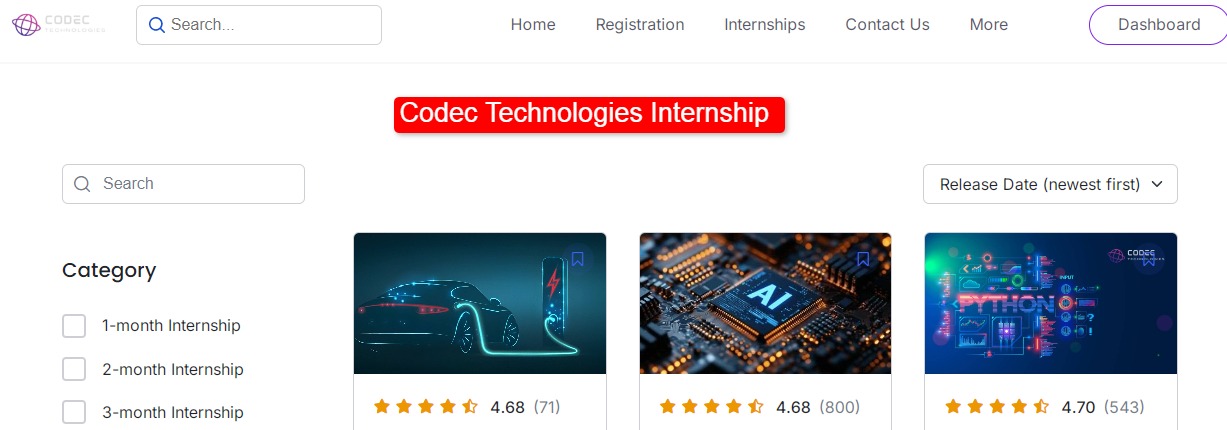
Understanding the 2026 Selection Criteria
Forget the idea that a high CGPA is your golden ticket. Based on what we’re seeing in the current recruitment cycle, Codec is pivoting hard toward problem-solving agility. They want to know if you can think on your feet, not just if you can memorize a textbook.
1. Technical Prerequisites
While every department has a “wish list,” successful 2026 applicants usually arrive with these core skills:
-
Modern Web Stacks: Comfort with React.js, Node.js, or Angular. Don’t just list them; have a deployed project to show for it.
-
Database Management: It’s not just about SQL anymore. You need to understand how to handle data in NoSQL environments like MongoDB.
-
The Cloud Edge: Even a basic certification in AWS or Azure can put you ahead of 50% of other applicants.
2. The Academic Bar
There’s a lot of talk about “skills over degrees,” but at a firm like Codec, the degree still acts as the first filter. They generally look for students in B.E./B.Tech, MCA, or specialized diploma programs.
Pro-Tip: Aim for at least 60% (6.5 CGPA). If you’re below that, your GitHub portfolio needs to be twice as impressive to bypass the automated screening bots.
How to Apply for Codec Technologies Internship (Step-by-Step)
The 2026 application cycle is 100% digital. If someone asks you for a “processing fee” or “security deposit,” walk away—it’s a scam. Here is the actual path:
Step 1: Portal Registration
Always start at the official Codec Technologies career portal. Avoid “job aggregator” sites that hide applications behind paywalls. Legitimate internships are always free to apply for.
Step 2: Resume Optimization (For the Robot and the Human)
Your resume isn’t for a human—at least not at first. It’s for an ATS (Applicant Tracking System).
-
The Layout: Keep it single-column. Fancy graphics and two-column layouts often confuse the scanner.
-
The GitHub Link: Don’t just link your profile. Link to a specific repository where you’ve contributed recently. Recruiters are looking for “green squares”—they want to see consistent coding, not just a one-semester wonder.
Step 3: The Technical Assessment
Once your resume clears, you’ll get an email with a test link. Expect about 20–30 MCQs on Data Structures (DSA) and a couple of live coding challenges.
-
Note: During the live coding round, talk through your logic. Use comments like:
// Using a Hash Map here to optimize lookup time.Even if your code has a small bug, showing you understand efficiency can win you the seat.
Common Challenges (And How to Avoid Them)
I’ve seen brilliant students fail this process because of silly technical glitches. Here’s how to stay safe:
-
The PDF Rule: Never upload a
.docxfile. Formatting shifts across different versions of Word can make your resume look like gibberish to a recruiter. Stick to PDF. -
The 48-Hour Deadline: Once that assessment link hits your inbox, the clock is ticking. Students who wait until the last 5 hours often deal with site crashes. Aim to finish it within the first 24 hours.
Frequently Asked Questions (FAQ)
Is the Codec Technologies internship paid? Yes. For the 2026 cycle, stipends generally fall between ₹12,000 and ₹20,000 per month, depending on your role.
Can final-year students get a job after the internship? Absolutely. Codec uses this program as a “test drive.” If you prove you can handle the workload during your 3 to 6-month stint, a Pre-Placement Offer (PPO) is very likely.
What is the duration? Usually 8 to 12 weeks. However, if your university requires a full 6-month project, you can usually negotiate an extension with HR.
Is it remote or in-office? It’s 2026, so “Hybrid” is the standard. Expect to spend at least 2 days a week at an office in Noida, Bangalore, or Pune. Networking happens much faster over coffee than over Zoom!
Final Thoughts
An internship at Codec Technologies isn’t just a line on your CV; it’s your first real look at how software is built at scale. It’s about the bugs you fix at 2:00 AM and the mentors you meet along the way.
What part of the application is giving you the most trouble? Whether it’s the portal glitching or not knowing which projects to list, drop a comment below. I try to get back to everyone within a day!